



How new entrepreneurs can start and thrive in Kenya: Lessons from StArfrica’s Expert Talk
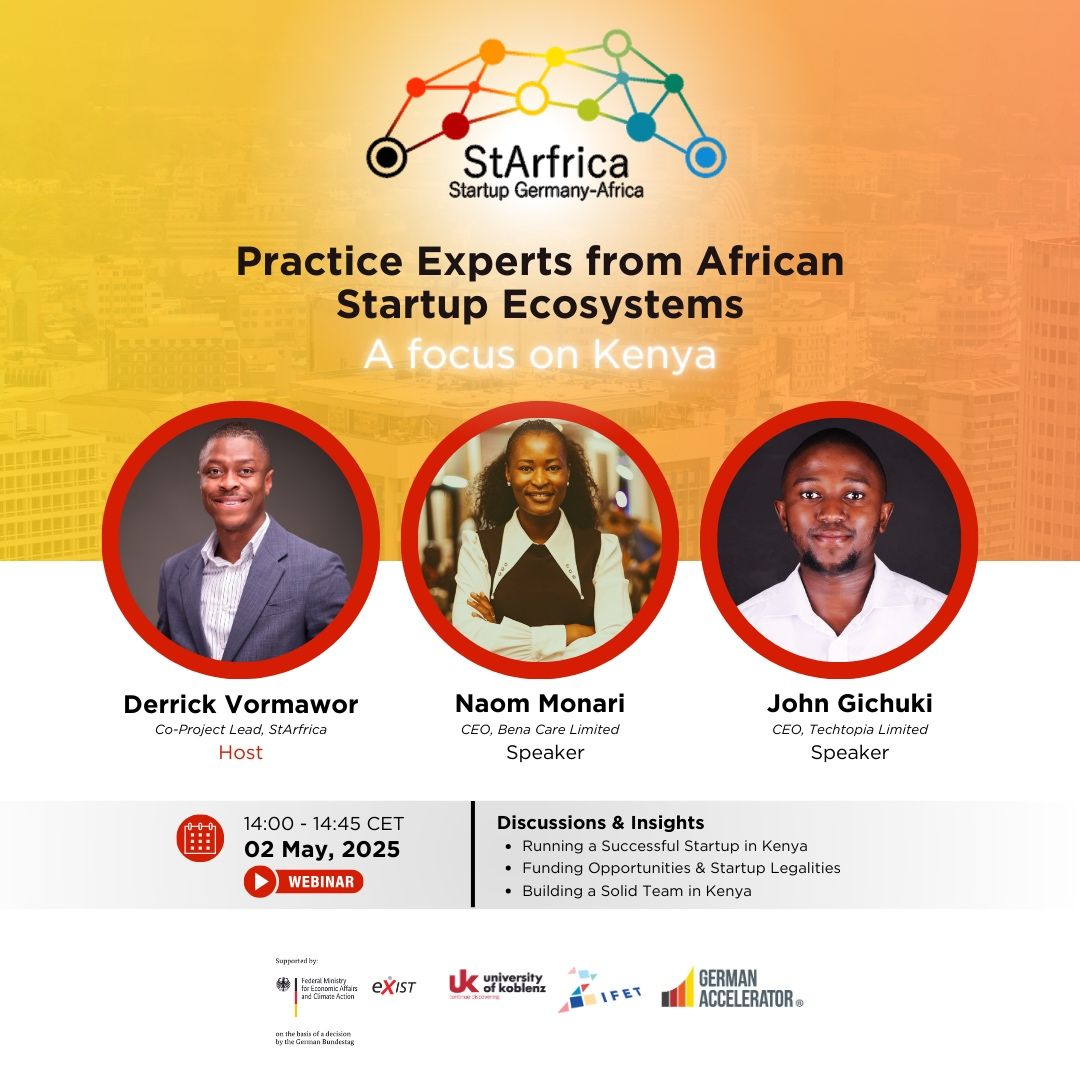
Kenya has cemented itself as East Africa’s startup hub, consistently leading in venture funding inflows across the region in 2024. Investors are paying attention, not just because of Nairobi’s status as “Silicon Savannah,” but because of the quality of solutions emerging from Kenyan founders. The discussion highlighted how human-centered design is at the core of most solutions in kenya as entrepreneurs focus on real community needs, not superficial trends. Many ventures are designed to bridge infrastructure gaps, from healthcare to internet access. Business models are scalable and adaptable to local and regional markets and most especially, products are also built for affordability and accessibility, ensuring inclusivity.
Entrepreneurship Approaches That Work in Kenya
A key takeaway from both John and Naom was that Kenyan startups succeed because they innovate with evidence.
- Need-based Innovation: Ideas are born out of actual gaps on the ground, such as the lack of accessible dialysis care or the high cost of the internet. By solving real, urgent challenges, startups guarantee relevance.
- Research-backed Solutions: Successful founders don’t just rely on intuition; they validate with data. This builds trust, strengthens product-market fit, and signals credibility to investors and partners.
Funding and Support Ecosystem
Kenya’s entrepreneurial ecosystem thrives because of the support structures available to startups. Panelists emphasized the importance of leveraging diverse resources, including University partnerships that connect research and entrepreneurship, local professional networks that foster mentorship and collaboration, government and international startup programs offering funding and policy support, and impact-driven investors who value both profitability and purpose. Naom and John highlighted that funding alone isn’t enough; credibility and partnerships often open doors to long-term growth.
You can watch a recap of the webinar below: